MENU UTAMA
Visitor Statistics

The Journal of Nexural Intelligence is committed to maintaining the highest standards of academic quality, scientific integrity, and publication ethics through a rigorous and transparent peer review process. The journal implements a comprehensive double-blind peer review system to ensure objective, fair, and unbiased evaluation of all submitted manuscripts.
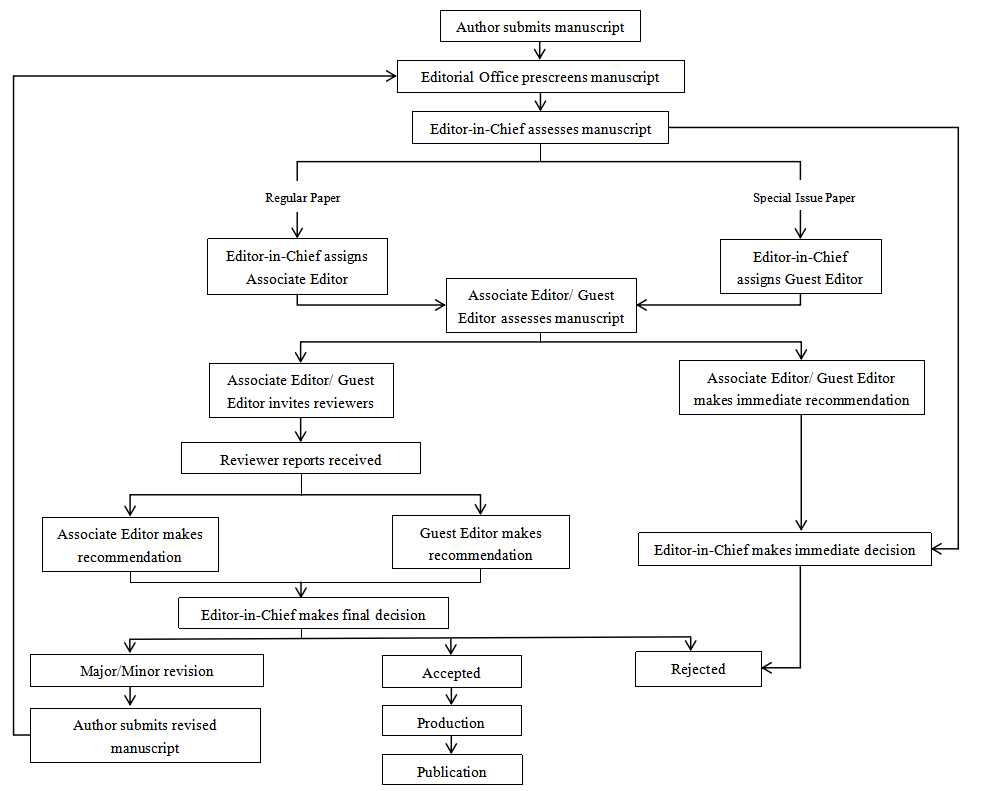
The peer review process of Nexural is conducted through the following stages:
All submitted manuscripts undergo an initial evaluation by the Editorial Board to assess:
At this stage, the editor may communicate with the author(s) regarding technical revisions, formatting adjustments, or the eligibility of the manuscript for further review. Manuscripts that do not meet the journal’s standards or fall outside the journal scope may be rejected without external review.
Manuscripts that successfully pass the initial editorial screening are assigned to at least two independent reviewers with expertise relevant to the manuscript topic.
The journal adopts a double-blind review process, in which:
This process is intended to maintain impartiality, objectivity, and academic fairness throughout the evaluation procedure.
Reviewers are requested to evaluate the manuscript based on several academic and scientific criteria, including:
Reviewers are also encouraged to provide constructive comments and recommendations that may help authors improve the quality of their manuscripts.
Based on the evaluation results, reviewers may provide one of the following recommendations:
The reviewer recommendations serve as important considerations in the editorial decision-making process.
The handling editor carefully considers all reviewer comments, evaluations, and recommendations before making a final editorial decision.
The final decision may include:
The editorial decision is based on scientific merit, reviewer feedback, journal standards, and publication ethics.
Authors of manuscripts requiring revisions must submit a revised version along with a response to reviewers’ comments within the specified timeframe.
Accepted manuscripts proceed to:
Manuscripts rejected after peer review may be resubmitted only after substantial revision and will undergo a new peer review process.
The Journal of Nexural Intelligence is dedicated to promoting high-quality interdisciplinary research and ensuring that every published article contributes meaningfully to the advancement of Artificial Intelligence, Machine Learning, Deep Learning, and Intelligent Computing technologies.