Predictive Analysis of Local Internet Service Stability Using QoS Parameters
DOI:
https://doi.org/10.71200/nexural.v1i1.268Keywords:
Quality of Service, Predictive Analysis, Network Stability, Decision Tree, Local InternetAbstract
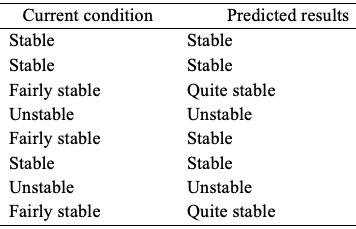
The increasing use of internet services in local internet networks such as RT/RW Net and small-scale internet service providers requires stable network quality to support user activities optimally. Problems such as high delay, packet loss, jitter, and low throughput often cause a decrease in internet service quality. This study aims to analyze the stability of local internet services using Quality of Service (QoS) parameters and apply predictive analysis to predict network stability conditions. The QoS parameters used in this study include delay, throughput, jitter, and packet loss. The research method used is quantitative, with data collection conducted through network monitoring using tools such as Wireshark, MikroTik Monitoring, and Speedtest. The collected data were processed and analyzed using the Decision Tree predictive method to classify network conditions into stable, fairly stable, and unstable categories. The results showed that QoS parameters significantly affect internet service stability, where delay and packet loss are the most dominant factors influencing network quality. The predictive model used was able to classify network conditions with an accuracy rate of 87.5%. Based on these results, predictive analysis based on QoS parameters can be used as a solution to support monitoring and decision-making in managing local internet services more effectively and efficiently.
Downloads
References
G. Wassie, J. Ding, and Y. Wondie, “Traffic prediction in SDN for explainable QoS using deep learning approach,” Sci. Rep., vol. 13, no. 1, pp. 1–15, 2023, doi: 10.1038/s41598-023-46471-8. DOI: https://doi.org/10.1038/s41598-023-46471-8
R. H. Serag, M. S. Abdalzaher, H. A. E. A. Elsayed, and M. Sobh, “Software Defined Network Traffic Classification for QoS Optimization Using Machine Learning,” J. Netw. Syst. Manag., vol. 33, no. 2, pp. 1–29, 2025, doi: 10.1007/s10922-025-09911-6. DOI: https://doi.org/10.1007/s10922-025-09911-6
C. Paterson and R. Calinescu, “Observation-Enhanced QoS Analysis of Component-Based Systems,” IEEE Trans. Softw. Eng., vol. 46, no. 5, pp. 526–548, 2020, doi: 10.1109/TSE.2018.2864159. DOI: https://doi.org/10.1109/TSE.2018.2864159
A. Mareta, I. Sakti, and H. Santoso, “Beyond Traditional QoS Management- Harnessing Machine Learning for Predictive Network Service Optimization,” Sinkron, vol. 9, no. 2, pp. 800–813, 2025, doi: 10.33395/sinkron.v9i2.14664. DOI: https://doi.org/10.33395/sinkron.v9i2.14664
R. R. Chowdhury, S. Chattopadhyay, and C. Adak, “CAHPHF: Context-Aware Hierarchical QoS Prediction With Hybrid Filtering,” IEEE Trans. Serv. Comput., vol. 15, no. 4, pp. 2232–2247, 2022, doi: 10.1109/TSC.2020.3041626. DOI: https://doi.org/10.1109/TSC.2020.3041626
M. M. Abidin, “Internet Network Analysis on Local Provider X Using QoS Method,” INTELLITHINGS J. AI IoT, vol. 1, no. 1, 2025, [Online]. Available: www.wireshark.org
M. Alreshoodi and J. Woods, “Survey on QoeQos Correlation Models Formultimedia Services,” Int. J. Distrib. Parallel Syst., vol. 4, no. 3, pp. 53–72, 2013, doi: 10.5121/ijdps.2013.4305. DOI: https://doi.org/10.5121/ijdps.2013.4305
X. Luo, H. Luo, and X. Chang, “Online optimization of collaborative web service QoS prediction based on approximate dynamic programming,” Int. J. Distrib. Sens. Networks, vol. 2015, 2015, doi: 10.1155/2015/452492. DOI: https://doi.org/10.1155/2015/452492
Y. F. Afidah and S. Mujiyono, “DECISION TREE BASED INTERNET SIGNAL QUALITY ANALYSIS ON TELKOM INFRASTRUCTURE,” vol. 2, no. 2, pp. 2102–2108, 2026.
A. N. W. Wardhana, M. Yahmin, and L. F. Aksara, “Quality of Service (QoS) analysis using Wireshark on the LAN network at An Najiyah High School Surabaya,” J. Mandiri IT, vol. 12, no. 4, pp. 222–228, 2024.
Downloads
Published
Issue
Section
License
Copyright (c) 2026 Ahlis Noor Kholili, Abdul Rahman (Author)

This work is licensed under a Creative Commons Attribution-ShareAlike 4.0 International License.